
GI cocktail billing looks simple on the surface. A patient comes in with abdominal pain or heartburn. The provider orders a GI cocktail. The nurse administers it.
But billing does not work that way.
Behind the scenes, GI cocktail coding raises frequent questions for coders, billers, and even providers.
If these questions are not handled correctly, claims get denied, bundled, or underpaid. Over time, that lost revenue adds up.
This guide explains GI cocktail coding and billing from start to finish, helping providers bill it correctly and receive timely reimbursements from insurance payers.
Let’s start with the basics and understand what a GA Cocktail is in a medical billing scenario.
| A GI (Gastrointestinal) Cocktail is a blend of liquid antacid, viscous lidocaine (a numbing agent), and often an antispasmodic like Donnatal (atropine, scopolamine, etc.). It is used in emergency rooms to rapidly treat indigestion (dyspepsia) or chest/belly pain. The purpose is to eliminate acid and relax the intestinal tract for relief. Studies indicate that it may not be much more effective than standard antacids in ruling out cardiac pain; however, it provides multi-symptomatic relief by decreasing acidity, alleviating pain, and mitigating spasms. |
A GI cocktail is not a single medication. It is a compound treatment, typically mixed on-site, to relieve gastrointestinal symptoms quickly.
Most GI cocktails include:
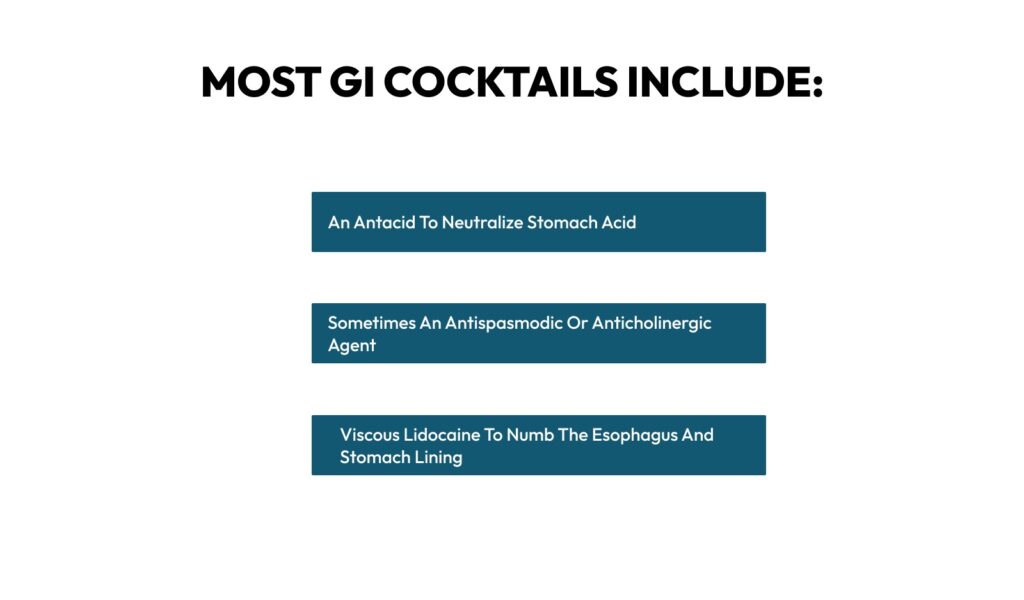
The exact formulation varies by facility. Emergency departments may use one formula, while urgent care centers or outpatient clinics use another. Some practices use premixed solutions, while others mix medications at the provider’s preference.
From a billing perspective, this matters because payer reimbursement depends on how the medication is classified, how it is administered, and whether it is considered integral to the visit.
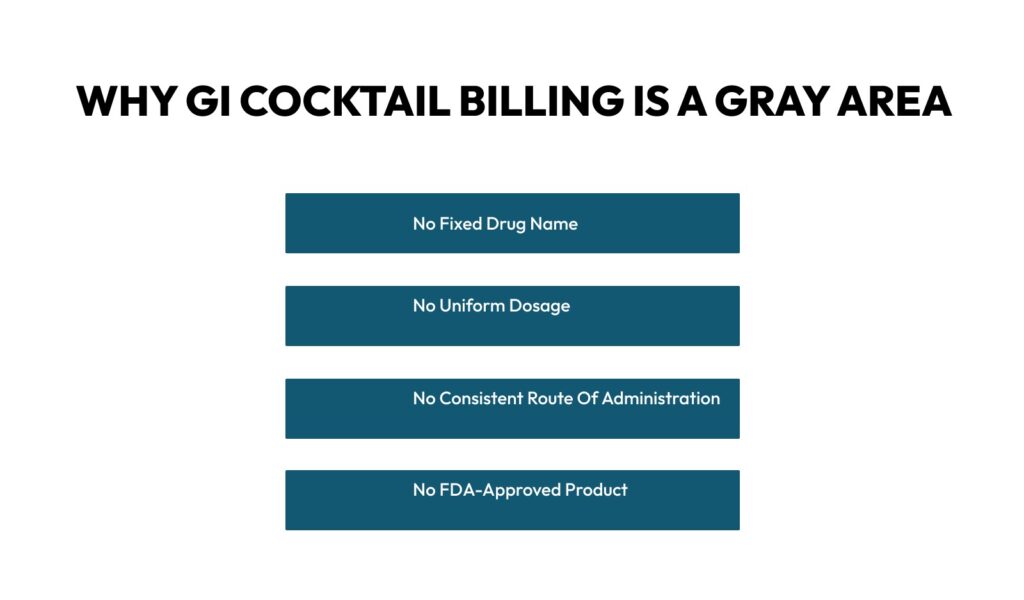
Medical coding systems rely on standardization. GI cocktails, by nature, are not standardized.
There is:
As a result, payers do not recognize GI cocktails as a separately billable service. Instead, they view them as supportive or incidental care that accompanies evaluation and management.
Coders who attempt to force GI cocktails into unrelated codes often trigger denials or audits.
When providers reach the limits of standard coding options for GI cocktail administration, unlisted procedure codes often come into play. This path exists for a reason. Medicine evolves faster than coding systems. New treatments, compounded therapies, and mixed drug administrations routinely fall into gaps where no precise CPT or HCPCS code applies.
GI cocktail administration is a textbook example of this gap.
That said, using unlisted codes is never simple, automatic, or guaranteed. It is a deliberate billing strategy that requires judgment, documentation, and realistic expectations.
A GI cocktail is not a single drug. It is not a defined procedure. It is a clinically accepted treatment that combines multiple oral medications into one administration.
Because of this, coders quickly discover three hard truths:
When all defined options fail, unlisted procedure codes are the only remaining tools that even attempt to reflect the service provided.
Unlisted codes exist to signal one thing to payers:
This service was medically necessary, performed correctly, and lacks a specific code today.
Unlisted procedure codes are not shortcuts. They do not describe a service in detail on their own.
Instead, they tell the payer, “Look at the documentation. The story is there.”
For GI cocktail administration, an unlisted code may be used to represent the clinical effort, preparation, administration, and monitoring involved when standard coding options do not apply.
However, payers expect the provider to prove why no existing code fits.
That burden always falls on documentation.
Unlisted procedure codes should never be the default choice. They may be reasonable only under specific circumstances.
For example, a provider may consider an unlisted code when:
The GI cocktail was central to patient evaluation, not incidental
Symptoms were severe or typical.
The administration required monitoring or reassessment.
The service went beyond routine office care.
In these cases, the GI cocktail is not simply comfort care. It plays a role in diagnosis or clinical decision-making.
Even then, success depends on payer policy and the strength of documentation.
Across the U.S., providers see gastrointestinal complaints every single day. Patients walk in with burning pain, upper abdominal discomfort, bloating, nausea, or chest pain that feels scary but turns out to be digestive in nature. In these moments, the GI cocktail becomes a practical clinical tool. It calms symptoms quickly and helps providers decide the next step in care.
But behind this simple mixture sits a layered clinical and billing reality. Each ingredient plays a specific role in symptom relief, and, from a coding perspective, each ingredient adds complexity. Understanding what goes into a GI cocktail is essential not only for treatment but also for compliant documentation and billing decisions.
GI complaints account for millions of outpatient and emergency visits every year in the U.S. Studies estimate that GERD and dyspepsia alone affect over 60 million Americans annually, making them some of the most common non-emergent complaints in urgent care and emergency departments.
A GI cocktail allows providers to do two things at once. First, it offers fast symptom relief. Second, it acts as a diagnostic aid. If pain improves significantly after administration, it supports a gastrointestinal origin rather than a cardiac or pulmonary cause.
Because of this dual role, GI cocktails are widely used in offices, urgent care centers, and ERs. Yet despite their commonness, coding guidance remains limited and often misunderstood.
A standard GI cocktail usually contains three categories of medication. While formulations may vary by facility or provider preference, the intent remains the same.
The foundation of the GI cocktail is the liquid antacid. This component neutralizes gastric acid, which is often the primary cause of burning pain and irritation.
Common antacids include aluminum hydroxide and magnesium hydroxide, which are often combined in products such as Mylanta or Maalox. These agents raise the pH of stomach contents, reducing acidity and providing rapid relief.
Simethicone is sometimes included to reduce gas bubbles, easing bloating and pressure. This does not treat acid directly but improves overall comfort.
From a coding perspective, antacids are oral, self-administered drugs. Even when given in-office, they are typically considered non-reimbursable as separate line items under most payer rules.
The second key ingredient is a viscous anesthetic, most often lidocaine viscous, known by brand names such as Xylocaine viscous.
This medication coats the throat, esophagus, and stomach lining. It numbs irritated mucosa and temporarily reduces pain signals. Patients often describe a noticeable improvement within minutes.
Chemically, lidocaine works by blocking sodium channels in nerve endings. This prevents pain signals from traveling to the brain.
Although lidocaine injections are billable in many settings, oral viscous lidocaine is treated very differently. When swallowed as part of a GI cocktail, it is categorized as a self-administered oral medication. That distinction is crucial for billing and reimbursement.
The third component targets smooth muscle activity. Anticholinergic agents such as Donnatal or glycopyrrolate are added to reduce gastrointestinal spasms and cramping.
These drugs block acetylcholine, a neurotransmitter that stimulates muscle contractions in the GI tract. By calming muscle activity, they help relieve cramping, urgency, and discomfort.
Clinically, this can make a significant difference for patients with gastritis or functional GI pain. From a billing standpoint, however, these medications remain oral and self-administered, which again limits separate reimbursement options.
While exact formulations vary, a commonly used GI cocktail includes the following components:
| Ingredient | Function | Common Brand Name | Typical Dose |
| Liquid Antacid | Neutralizes stomach acid | Mylanta or Maalox | 30 mL |
| Viscous Anesthetic | Numb throat, esophagus, stomach | Xylocaine viscous | 5 mL |
| Anticholinergic | Relieves cramping and spasms | Donnatal | 10 mL |
These medications are mixed and given orally, often in a single cup. The patient drinks the mixture under supervision.
This is where many practices struggle.
Coding is not based on what medications were mixed. It is based on how they were administered and how payers classify them.
Even though each ingredient has its own pharmacologic identity, once combined and given orally, the GI cocktail becomes a bundled, self-administered treatment.
This distinction drives several key billing outcomes:
Payers focus less on chemistry and more on the administration route and setting.
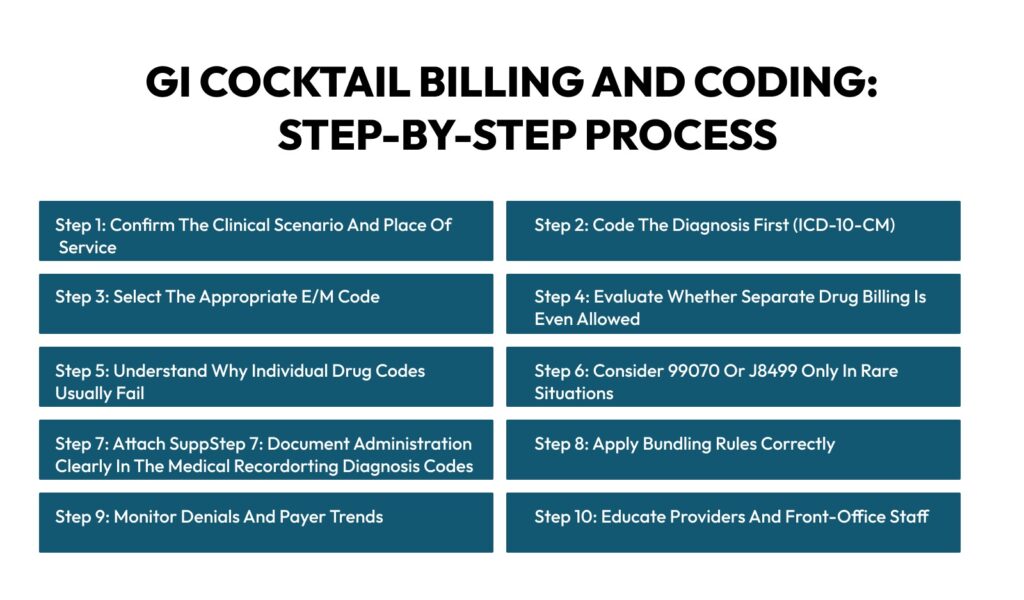
Billing a GI cocktail is not about finding a magical code. It is about understanding how payers view oral medications, how services are bundled into E/M visits, and how documentation supports the services you bill for. Below is the real, step-by-step workflow experienced billing teams follow to stay compliant and avoid denials.
This is not a theory. This is how it works in day-to-day U.S. medical billing.
Before you even think about codes, look at where and why the GI cocktail was given.
GI cocktails are most commonly administered in:
Place of service matters because payer rules differ for office visits versus hospital-based encounters. Medicare, for example, applies stricter rules for self-administered drugs in outpatient settings.
At this step, confirm that the GI cocktail was given as part of evaluation for dyspepsia, epigastric pain, gastritis, or related symptoms, not as a standalone service.
This confirmation sets expectations early. In most cases, you are already dealing with a bundled service.
Diagnosis drives everything.
Start by assigning the most accurate ICD-10 code based on provider documentation. Common examples include dyspepsia, epigastric pain, GERD, or gastritis.
Avoid vague or unspecified diagnoses when possible. Payers review diagnoses to justify medical necessity. A GI cocktail given for chest pain evaluation, for example, carries a different clinical weight than one given for routine indigestion.
Clean diagnosis coding supports the E/M service, which is where reimbursement usually lives.
This is the most crucial billing step.
Since GI cocktails are typically bundled, the evaluation and management code becomes the primary revenue driver.
Code the visit based on:
Documented assessment, differential diagnosis, and response to treatment matter here.
A patient presenting with severe epigastric pain, requiring diagnostic evaluation and symptom relief, may justify a higher-level E/M than simple indigestion.
This is where experienced coders protect revenue without violating payer rules.
Now comes the critical judgment call.
Ask one question:
Is the GI cocktail a self-administered oral drug?
In almost all cases, the answer is yes.
Under Medicare and most commercial plans, self-administered oral medications are not separately reimbursed when provided in an office or outpatient setting.
At this step, many billing teams intentionally stop. They do not attempt separate drug billing because experience shows it leads to denials.
Knowing when not to bill is a skill.
Each component of a GI cocktail has its own classification. But once mixed and given orally, payers no longer treat them as billable injections or infusions.
You cannot realistically bill:
Even if prepared by staff, they fall under self-administered drug rules.
Trying to break them out often triggers payer edits and denials.
Some providers still ask about alternative codes.
CPT 99070 for supplies may be considered, but most payers either bundle it or deny it because medications are not regarded as incidental supplies.
HCPCS J8499 for unclassified oral drugs is another option, usually in ASC or hospital settings. However, this code almost always requires manual review and extensive documentation.
Use these codes only if:
Otherwise, they create more work than they return.
Even when you do not bill separately, documentation still matters.
The provider should clearly document:
This documentation supports the medical necessity of the E/M visit and protects the practice during audits.
Clear notes also help justify higher-level E/M codes when appropriate.
Bundling is not a penalty. It is how payers structure reimbursement.
GI cocktails are generally considered incidental to evaluation and treatment.
The cost is expected to be covered under:
Applying bundling correctly prevents compliance issues and overbilling risks.
Even when billing correctly, payer behavior changes.
Experienced billing teams regularly review denial patterns. If a payer begins paying or denying inconsistently, document it.
Patterns matter more than one-off payments.
Use denial data to guide future billing decisions instead of reacting claim by claim.
Many billing problems start upstream.
Providers sometimes expect separate reimbursement because medication was given. Front-desk staff may assume drug charges apply.
Education closes this gap.
When everyone understands that GI cocktails are usually bundled, expectations align, and billing becomes smoother.
GI cocktail administration falls into a gray area of medical billing. Clinically, it is effective, fast, and widely accepted. From a coding and reimbursement standpoint, however, it demands caution, clarity, and strong documentation. There is no single CPT or HCPCS code that perfectly captures a GI cocktail. Most payers view it as a bundled, self-administered oral treatment tied to the evaluation and management service.
Providers who expect separate reimbursement often face denials. Those who document thoroughly, code conservatively, and understand payer expectations avoid audits and compliance headaches. The real opportunity lies in optimizing the E/M level, supporting medical necessity, and applying unlisted codes only when absolutely justified.
In short, GI cocktail billing is less about chasing a perfect code and more about mastering documentation, payer rules, and revenue cycle discipline. Practices that treat it this way stay compliant and financially stable.
Medhesty Medical Billing helps practices navigate complex scenarios, such as GI cocktail coding, with clarity and compliance. Our team understands payer rules, Medicare policies, and real-world denial trends. We focus on protecting revenue without triggering audits.
Whether you run a physician’s office, urgent care center, or outpatient facility, Medhesty ensures your GI services are coded accurately, appropriately documented, and reimbursed correctly—every time.
No. There is currently no dedicated CPT or HCPCS code that represents a GI cocktail as a single service. Each ingredient may have its own drug identity, but when combined and given orally, payers treat it as a bundled service. Most reimbursement is tied to the E/M visit rather than the medications themselves.
Some practices attempt to use 99070 for supplies and materials, but this code is not intended for medications. Most commercial payers and Medicare deny claims when 99070 is used for GI cocktails. It should be used cautiously and only when payer policy explicitly allows it.
In most outpatient settings, Medicare considers GI cocktail components to be self-administered oral drugs. These are generally non-covered. Medicare expects the cost to be bundled into the E/M service, making separate reimbursement unlikely.
Unlisted codes may be considered when no existing code reasonably describes the service and when medical necessity is clearly documented. Even then, prior authorization, detailed narratives, and follow-up are essential. Payment is never guaranteed, and denial rates are high without payer approval.
Strong documentation should include presenting symptoms, clinical rationale for administration, exact medications and dosages, route of administration, and patient response. This supports E/M coding, demonstrates medical necessity, and protects the practice during audits or payer reviews.
Sleep apnea is no longer a niche diagnosis.
It is now one of the most frequently documented sleep-related disorders across primary care, pulmonology, cardiology, neurology, ENT, and sleep medicine practices in the United States.
Yet, despite its prevalence, sleep apnea claims continue to face high denial rates, delayed payments, and audit risk. The reason is not the condition itself. The problem lies in how ICD-10 codes for sleep apnea are selected, documented, and billed.
Many practices underestimate how closely payers examine sleep apnea diagnoses. Others rely on generic coding habits that worked years ago but no longer meet today’s payer standards.
This guide explains ICD-10 sleep apnea codes the way real billing teams and providers need to understand them. It connects clinical documentation, diagnostic testing, payer rules, and reimbursement expectations into one clear picture.
This guide is designed for healthcare professionals and billing teams who manage sleep apnea services and need accurate, denial-resistant coding. It is particularly relevant for:
Whether you are diagnosing sleep apnea, billing sleep studies, managing CPAP compliance, or appealing denials, accurate ICD-10 coding is the foundation of successful reimbursement.
Sleep apnea is not a single condition.
It is a category of disorders characterized by repeated interruptions in breathing during sleep. Airway obstruction, neurologic signaling issues, or a combination of both may cause these interruptions.
From a billing perspective, this distinction is critical. Payers generally do not reimburse for “sleep apnea.” They reimburse specific types of sleep apnea supported by objective testing and medical necessity.
This is why ICD-10 coding accuracy matters so much in sleep medicine. The diagnosis drives coverage for sleep studies, CPAP therapy, DME supplies, and long-term management.
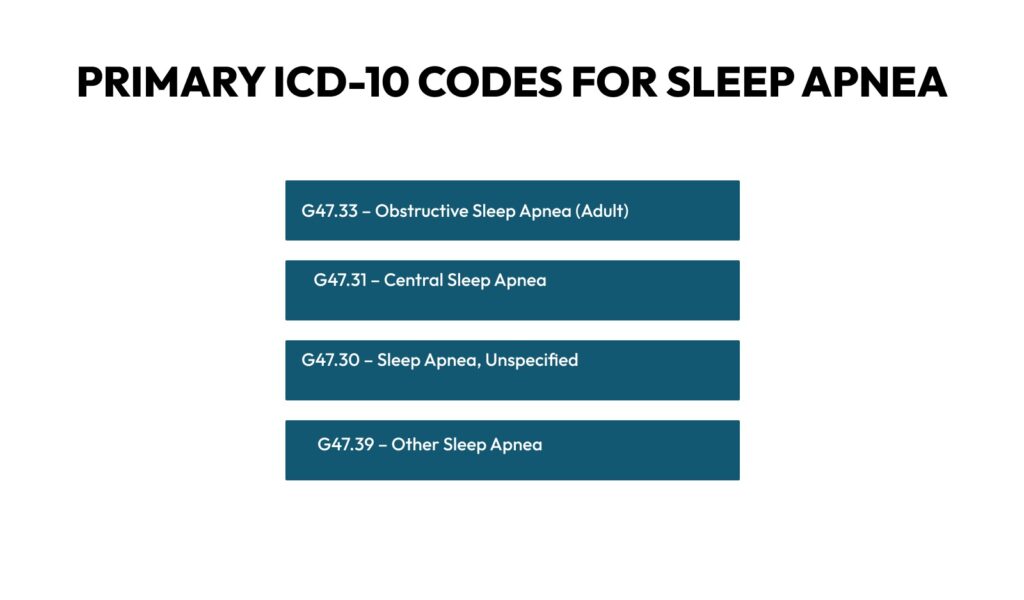
The most commonly used ICD-10 codes for sleep apnea fall under the G47.3 category. Each code reflects a different clinical mechanism, and each carries different billing implications.
G47.33 is by far the most frequently billed sleep apnea diagnosis. It describes obstructive sleep apnea in adults, where airway collapse or obstruction causes breathing pauses during sleep.
This code is widely accepted by Medicare and commercial payers when supported by a qualifying sleep study. It commonly supports reimbursement for:
Because of its prevalence, G47.33 is also heavily audited. Documentation must clearly link symptoms, testing results, and treatment decisions.
Central sleep apnea occurs when the brain fails to send proper signals to the muscles that control breathing. It is less common than obstructive sleep apnea and often associated with neurologic disease, heart failure, or opioid use.
Claims billed with G47.31 require strong supporting documentation, as payers often scrutinize whether the diagnosis is truly central rather than obstructive.
G47.30 is used when sleep apnea is suspected, but the type has not yet been determined. From a billing standpoint, this code should be handled with caution.
It may be appropriate during initial evaluations or referrals, but prolonged use without diagnostic clarification increases the risk. Payers expect the type of sleep apnea to be confirmed through testing.
This code applies to less common forms of sleep apnea that do not fit neatly into obstructive or central categories. It is used sparingly and usually in complex cases.
| ICD-10 Code | Description | Billing Risk Level | Key Billing Notes |
|---|---|---|---|
| G47.33 | Obstructive Sleep Apnea (Adult) | High | Most commonly billed and audited |
| G47.31 | Central Sleep Apnea | High | Requires strong neurologic or cardiac justification |
| G47.30 | Sleep Apnea, Unspecified | Very High | Short-term use only; high denial risk |
| G47.39 | Other Sleep Apnea | Moderate | Used in rare, complex cases |
This table improves claim accuracy, speeds internal review, and reduces reliance on unspecified diagnosis codes that often trigger payer scrutiny.
Sleep apnea diagnoses are not based solely on symptoms.
Payers require objective evidence.
Polysomnography and home sleep apnea testing are the foundation of diagnosis. The test results must demonstrate apnea-hypopnea index (AHI) thresholds that meet payer criteria.
Medicare, for example, requires documented AHI values and associated symptoms to support coverage for CPAP therapy. Commercial payers often follow similar standards but may impose additional requirements.
Without clear test documentation, even the correct ICD-10 code will fail to support reimbursement.
Strong documentation tells a complete story.
It explains why testing was ordered, what the results show, and how treatment decisions were made.
Clinical notes should reflect:
When documentation is vague or fragmented, payers question medical necessity. This is one of the most common causes of denied sleep apnea claims.
Sleep apnea denials are rarely caused by the condition itself. They are most often the result of coding and documentation errors that weaken medical necessity. The most common issues include:
Payers expect diagnosis codes to evolve as testing confirms the type and severity of sleep apnea. Failure to update codes increases denial risk and audit exposure.
Sleep apnea billing is not limited to a single CPT code or service type. In real-world practice, providers bill a cluster of diagnostic, monitoring, and treatment-related CPT codes tied closely to the sleep apnea diagnosis being managed. When these codes are not linked correctly to ICD-10 sleep apnea diagnoses, claims stall, are denied, or are reimbursed at lower rates.
From my experience working with sleep clinics, pulmonology groups, ENT practices, and primary care offices, most billing issues arise when providers bill the correct service but fail to match it to the diagnosis, setting, or payer expectations. Let’s break this down in detail so you understand which CPT codes are commonly billed, why they are used, and how payers review them.
Diagnostic testing forms the foundation of sleep apnea billing. Payers expect objective evidence before approving long-term therapy such as CPAP or oral appliances. Because of this, diagnostic CPT codes are heavily scrutinized.
95810 – Polysomnography (PSG), In-Lab Study
This code is used for a complete, attended overnight sleep study performed in a sleep lab. It records multiple physiologic parameters, including EEG, EOG, EMG, airflow, respiratory effort, and oxygen saturation.
Providers typically bill 95810 when:
Medicare and commercial payers often view 95810 as the gold standard. However, the documentation must justify why an in-lab study was medically necessary rather than a home test. Without that explanation, payers may downcode or deny the claim.
This code applies when positive airway pressure titration is performed during the sleep study. It is commonly billed when sleep apnea has already been established, to determine optimal CPAP or BiPAP settings.
Key billing considerations include:
Many denials occur when providers bill 95811 without documentation showing that titration was clinically indicated.
Home sleep testing has grown rapidly, especially following expanded coverage policies and the adoption of telehealth. Payers favor home testing when clinically appropriate because it is less costly than in-lab studies.
95800 – Unattended Sleep Study
This code represents a basic unattended sleep study measuring respiratory effort, airflow, and oxygen saturation.
It is commonly billed for:
However, payers expect strict adherence to coverage criteria. If the patient does not meet home testing requirements, claims may be denied even if the test was performed correctly.
95806 – Home Sleep Apnea Test with Respiratory Parameters
This is one of the most frequently billed CPT codes for sleep apnea diagnostics today. It includes monitoring airflow, respiratory effort, and oxygen saturation.
Billing success depends on:
Failure to document physician interpretation is a common mistake that leads to recoupments.
Sleep apnea management does not stop at diagnosis. Ongoing evaluation, counseling, and follow-up visits are essential parts of care and are frequently billed.
99202–99205 and 99212–99215 – Office or Outpatient E/M Visits
These codes are used for new and established patient visits related to:
Payers expect:
Overcoding E/M levels without adequate documentation increases audit risk, especially when sleep apnea follow-ups are billed repeatedly.
Treatment of sleep apnea often involves durable medical equipment. While many of these are HCPCS codes, CPT-related services support their use and compliance with CPT.
94660 – CPAP Ventilation Assistance
This CPT code is used for continuous positive airway pressure assistance, often billed when CPAP therapy is initiated or monitored in a clinical setting.
Common billing errors include:
Payers carefully review this code due to historical overuse.
In cases where conservative therapy fails, surgical intervention may be considered. Sleep apnea diagnoses often support a variety of ENT-related CPT codes.
31575 – Diagnostic Laryngoscopy
Used to evaluate airway obstruction contributing to sleep apnea. Documentation must explain how findings relate to the apnea diagnosis.
42145 – Uvulopalatopharyngoplasty (UPPP)
A surgical treatment for obstructive sleep apnea in select patients. This code requires:
These claims often undergo pre- and post-payment review.
Some patients cannot tolerate CPAP and move toward oral appliance therapy.
97760 / 97763 – Orthotic Management and Training
These CPT codes may be used for training and adjustment of oral appliances when billed by eligible providers.
Payers expect:
Improper billing here often leads to partial payment or denial.
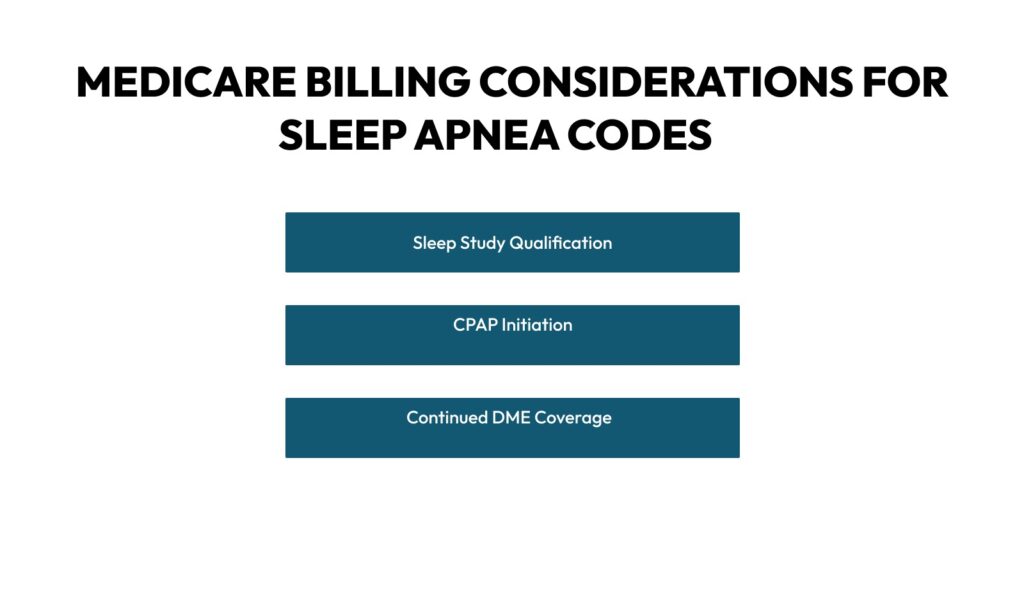
Medicare closely regulates sleep apnea services.
Coverage determinations outline strict criteria for:
Medicare expects accurate diagnosis coding. Using G47.30 when obstructive sleep apnea has already been confirmed often leads to denials or post-payment review.
Medicare also monitors long-term CPAP compliance documentation. Diagnosis codes must align with ongoing medical necessity.
Medicaid programs vary by state, but many require prior authorization for sleep studies and CPAP equipment. Unspecified sleep apnea codes frequently trigger requests for additional documentation.
Commercial insurers often apply automated edits to flag sleep apnea claims that lack clear diagnostic confirmation. Appeals are successful when documentation is detailed, and diagnosis coding is precise.
Practices that tailor billing workflows to payer-specific rules experience faster approvals and fewer rework cycles.
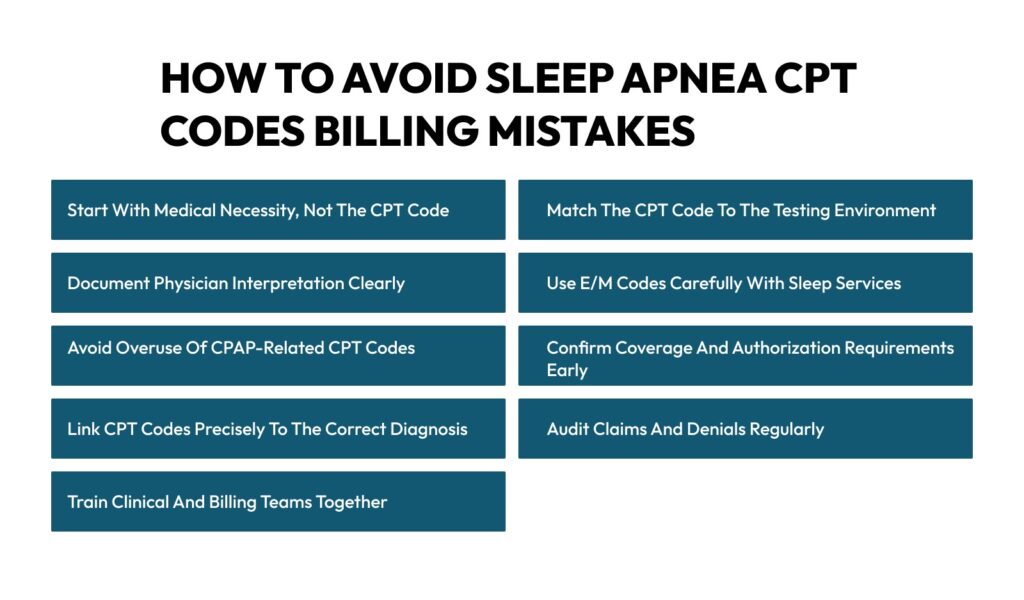
Sleep apnea billing looks simple on paper. In reality, it is one of the most closely reviewed areas in medical billing. Payers know sleep studies, CPAP therapy, and follow-up visits generate steady revenue. Because of that, they scrutinize every CPT code, modifier, and note. Small gaps often lead to denials, downcoding, or post-payment audits.
With years of revenue cycle experience in sleep medicine and pulmonary practices, most billing mistakes do not occur solely at the coding desk. They start much earlier. They begin with ordering, documentation habits, and workflow breakdowns. Let’s walk through the most effective ways to avoid sleep apnea CPT billing mistakes and protect reimbursement.
One of the biggest billing errors is choosing a CPT code first and justifying it later. Payers expect the opposite. They want to see a clear clinical story that leads naturally to the service performed.
For sleep apnea, documentation should clearly explain symptoms such as excessive daytime sleepiness, loud snoring, witnessed apneas, morning headaches, or poor concentration. Risk factors like obesity, hypertension, atrial fibrillation, or diabetes should also be clearly noted. When medical necessity is evident in the note, selecting a CPT code becomes much easier and more defensible.
Claims fail when sleep studies are billed with vague complaints like “fatigue” or “sleep issues” without a deeper clinical context. Payers often deny these claims because the testing rationale is unclear.
Sleep apnea diagnostic CPT codes vary based on where and how the test was performed. Mixing these up is a common and costly mistake.
In-lab polysomnography codes require documentation showing why a facility-based study was necessary. Home sleep testing codes require proof that the patient met the criteria for unattended testing. Billing a home sleep test CPT code for a patient with complex cardiopulmonary disease often leads to denial, even if the test was completed correctly.
To avoid this, practices should document:
Clear justification aligns the CPT code with payer expectations and reduces pushback.
Sleep study CPT codes are not just about data collection. Payers expect professional interpretation and a signed report.
One frequent mistake is submitting claims without clear documentation showing that a qualified provider reviewed and interpreted the results. Automated reports alone are not enough. The provider’s interpretation, impression, and plan must be part of the medical record.
To avoid denials:
This step alone prevents a large percentage of post-payment recoupments.
Evaluation and management visits are commonly billed alongside sleep apnea services. Mistakes happen when E/M levels are selected without proper medical decision-making or time documentation.
Payers expect E/M notes to reflect:
Billing higher-level E/M codes repeatedly for routine CPAP follow-ups without new decision-making often raises red flags. Staying conservative and documentation-driven reduces audit risk.
When E/M services occur on the same day as diagnostic testing, correct modifier usage becomes critical. Missing or unsupported modifiers are a frequent denial trigger.
CPAP-related CPT codes are among the most audited in sleep medicine. Payers closely monitor frequency and justification.
Errors often include:
To avoid issues, documentation should explain:
When documentation shows real clinical involvement, claims hold up much better under review.
Many sleep apnea services require prior authorization, especially repeat sleep studies, surgical interventions, and specific advanced testing.
Billing mistakes occur when services are performed first, and authorization is checked later. At that point, payment risk is already high.
Strong front-end processes help prevent this:
This approach prevents denials that cannot be appealed successfully.
Sleep apnea has multiple ICD-10 codes. Using a generic or unspecified diagnosis often weakens the claim.
Each CPT code should clearly align with the correct diagnosis, whether obstructive, central, or mixed sleep apnea. Severity, complications, and related conditions strengthen the clinical picture and support reimbursement.
When diagnosis coding is too broad, payers question whether the CPT service was appropriate. Specificity protects the claim.
Many practices repeat the same billing mistakes because no one reviews patterns. Denial trends often point directly to workflow or documentation problems.
Regular internal audits help identify:
Fixing the root cause prevents future losses and improves overall revenue cycle performance.
Sleep apnea billing mistakes often happen because clinical staff and billing staff work in silos. Providers may not know how their documentation affects CPT selection. Billers may not fully understand clinical intent.
Joint training sessions help align both sides. When providers understand payer expectations and billers understand clinical workflows, errors drop significantly.
Sleep apnea billing involves far more than selecting an ICD-10 code. It requires coordination between clinical documentation, diagnostic testing, CPT selection, payer policies, and long-term compliance tracking. Because sleep apnea services often include recurring testing and equipment billing, even small documentation gaps can lead to denials, delayed payments, or post-payment audits.
Medical billing teams that specialize in sleep medicine understand how diagnosis specificity, CPT pairing, and payer rules intersect. At Medhasty Medical Billing, sleep apnea billing workflows are built around payer documentation standards, diagnostic progression, and audit-resistant coding practices—helping practices reduce denials while maintaining compliance across Medicare, Medicaid, and commercial plans.
Practices that rely on generalized billing workflows often struggle with sleep apnea reimbursement. Specialized billing processes ensure that diagnosis coding, CPT services, and payer requirements remain aligned throughout the patient’s course of care.
ICD-10 codes for sleep apnea are not interchangeable.
Each code carries specific clinical and financial implications.
When diagnosis selection aligns with documentation, testing results, and payer rules, sleep apnea claims move smoothly through the revenue cycle. When they do not, denials and audits follow.
Precision, progression, and documentation are the pillars of successful sleep apnea billing.
In most cases, sleep apnea cannot be billed or reimbursed for treatment without objective diagnostic testing. Payers rely on sleep studies to confirm the presence, type, and severity of sleep apnea. While symptoms such as snoring, daytime sleepiness, or witnessed apneas may justify ordering a test, they rarely support payment for treatment or equipment on their own. Without documented test results, claims for CPAP therapy, oral appliances, or related services are commonly denied. Objective testing establishes medical necessity and protects the claim from audit risk.
G47.30, which represents unspecified sleep apnea, is generally not sufficient for CPAP or other durable medical equipment billing. Payers expect providers to identify whether the condition is obstructive, central, or mixed before approving therapy. Using an unspecified diagnosis often signals incomplete evaluation and increases the likelihood of denial. Updating the diagnosis once testing confirms the apnea type strengthens claims and supports ongoing treatment coverage.
Medicare does cover home sleep apnea testing when specific clinical criteria are met. Coverage depends on documented medical necessity, appropriate patient selection, and proper physician interpretation. Home testing is typically approved for patients with a high likelihood of obstructive sleep apnea and without complex comorbid conditions. Claims may be denied if documentation does not explain why home testing was appropriate or if required elements, such as provider interpretation, are missing from the record.
Sleep apnea diagnoses should be updated promptly once diagnostic testing confirms the type and severity of the condition. Initial suspected or unspecified diagnoses should not remain in the record once objective data is available. Updating the diagnosis ensures alignment between clinical findings, CPT codes, and payer requirements. Timely updates reduce denial risk and support continued coverage for therapy and follow-up services.
Sleep apnea claims are subject to frequent review due to high utilization of diagnostic testing and long-term equipment use. CPAP-related services, repeat sleep studies, and DME claims receive particular attention from payers. Audits often focus on medical necessity, documentation quality, and compliance with coverage guidelines. Practices with consistent documentation and accurate coding are better positioned to withstand audits without financial disruption.
Many commercial payers base their sleep apnea coverage policies on Medicare guidelines, but they do not follow them exactly. Authorization requirements, testing criteria, and coverage limits may differ by plan. Relying solely on Medicare rules can lead to denials when billing commercial insurance. Reviewing payer-specific policies and verifying requirements before testing or treatment helps avoid unexpected payment issues.
Skilled Nursing Facility billing is where hospital complexity meets long-term care regulations. At the center of that complexity sits Revenue Code 0022—the small but powerful signal that tells Medicare, “This claim must be priced under the SNF Prospective Payment System using HIPPS.”
Most SNF denials don’t happen because the patient wasn’t eligible. They happen because the HIPPS code doesn’t match the MDS, the dates don’t line up, or the 0022 line is formatted wrong. One mismatch can delay a claim for weeks in high-volume SNF billing, quietly but consistently destroying cash flow.
This guide breaks 0022 down the way billers actually need it explained—without policy fluff and without textbook theory.
Revenue Code 0022 is the cornerstone of SNF PPS billing. Unlike ancillary codes such as pharmacy (0250) or therapy (0420), 0022 does not represent a discrete service; instead, it means the base SNF PPS payment under Medicare. Its primary role is to tell the payer:
“Do not price this like a regular fee-for-service claim. Apply the PDPM logic and HIPPS grouping instead.”
Without this revenue code, Medicare cannot correctly interpret the claim, and the payment will likely be delayed or denied.
At its core, Revenue Code 0022 signals SNF PPS payment eligibility. It tells the payer that the claim is grouped under PDPM (Patient-Driven Payment Model) and that the corresponding HIPPS code—generated from the patient’s MDS assessment—should dictate the base reimbursement. This single line drives how Medicare calculates the payment for the entire stay, and every other revenue line (therapy, pharmacy, nursing, ancillary services) ultimately attaches to this base payment.
On the UB-04 or 837I claim, 0022 appears as a revenue line paired with:
Unlike ancillary codes, which represent individual billable items, 0022 drives the entire PPS payment logic. Think of it as the anchor line for the claim; all other charges are “hanging” off it for reconciliation
Medicare calculates SNF PPS payment based entirely on:
Importantly, the dollar value of 0022 is not typed in by the biller—it is calculated automatically by Medicare based on these inputs. Accurate HIPPS and PDPM coding is, therefore, essential for proper reimbursement.
State Medicaid programs vary:
Providers must consult state-specific SNF billing manuals to ensure compliance with 0022 for Medicaid claims.
Commercial insurers may handle 0022 differently:
It’s crucial to verify the contract terms and payer-specific rules before submitting 0022 claims to avoid denials or underpayments.
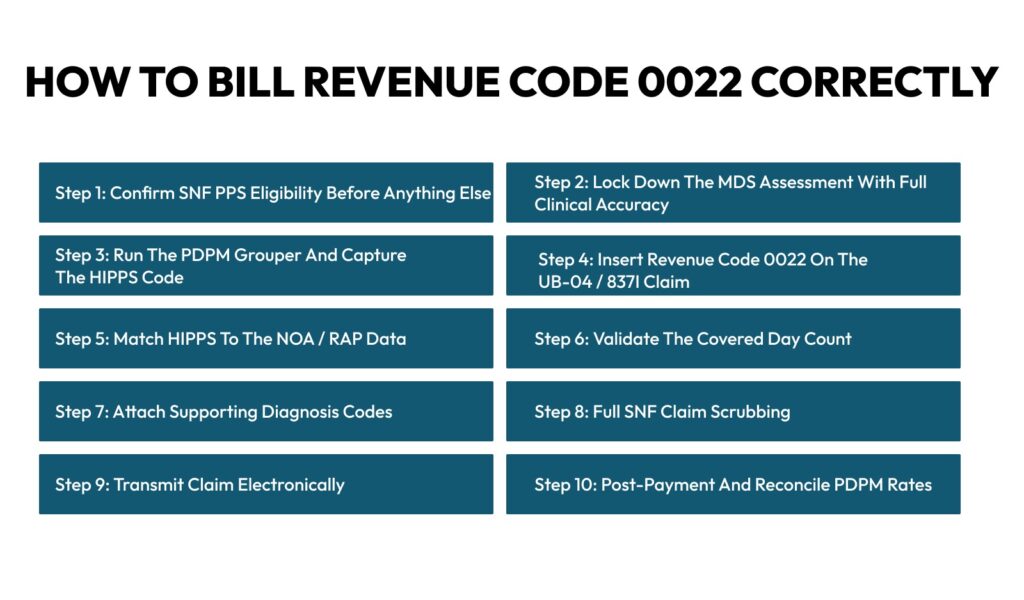
Billing Revenue Code 0022 is far more than entering a line on a claim—it’s the financial translation of your clinical documentation into payable Medicare revenue. This code represents the SNF Prospective Payment System (PPS) reimbursement, driven by MDS assessments, PDPM grouping, and HIPPS codes. Any break in this chain—whether in documentation, coding, or claim submission—can result in returned claims, underpayments, or audits. High-performing SNF billing teams follow a strict workflow to minimize errors and maximize reimbursement. Here’s a real-world, denial-proof approach:
Before touching HIPPS codes or generating PDPM groups, confirm the patient qualifies for SNF PPS billing:
Even a single eligibility error can invalidate the 0022 claim, resulting in a complete denial despite accurate downstream coding.
The Minimum Data Set (MDS) assessment drives your PDPM classification, which in turn determines payment. Accuracy here is critical:
Even a single missed diagnosis or mis-scored function can shift the patient into a lower-paying HIPPS group, reducing reimbursement.
Once MDS is finalized:
Never reuse HIPPS codes from previous stays or manually guess—they must be generated fresh for each patient episode.
Now, billing begins:
Formatting errors at this stage—incorrect dates, mismatched HIPPS, or missing totals—are common denial triggers.
Medicare cross-checks your claim against the Notice of Admission (NOA) or Request for Anticipated Payment (RAP):
Always reconcile your final claim with NOA or RAP data before submission.
Payment is tied to benefit days, so billing must reflect:
Overbilling—even by a day—can trigger automatic denials.
The 0022 line cannot stand alone. Proper supporting documentation is essential:
If your diagnosis logic does not match the HIPPS group, audits and recoupments are likely.
Before submission, scrub the claim thoroughly:
This scrubbing alone can reduce denials by 25–40%.
Send claims via:
After submission, track:
Promptly address any system feedback to avoid delayed payments.
After receiving remittance:
Many hidden revenue losses are discovered at this stage, making reconciliation critical for financial health.
Revenue Code 0022 is the heartbeat of SNF PPS billing. It doesn’t just indicate a service—it drives Medicare payment through PDPM and HIPPS logic. A single misstep, whether it’s an incorrect HIPPS code, misaligned therapy data, or an unrecorded discharge date, can trigger denials, underpayments, or extended cash flow delays.
By following structured best practices—carefully reviewing therapy entries, locking HIPPS codes, auditing PDPM rates, and tracking variances between expected and actual payments—providers can protect revenue and prevent costly errors. Maintaining accurate documentation, creating HIPPS change logs, and training coders on PDPM logic ensures claims are compliant, defensible, and properly reimbursed.
In short, precise Revenue Code 0022 billing is not optional—it’s the foundation of financial stability in SNF operations. Providers who prioritize accuracy, validation, and proactive audits will see fewer denials, smoother cash flow, and maximum reimbursement for every patient stay.
Revenue Code 0001 doesn’t represent treatment, therapy, medication, or even a specific department—but it still has the power to stop your entire claim cold. This code means one thing only: the total dollar amount of your claim. And when that total doesn’t line up perfectly with the rest of the charges, payers reject the claim without hesitation.
Hospitals and facilities lose thousands every month because their line-item charges don’t equal the 0001 total. It sounds like a simple math problem, but in real billing environments—with dozens of departments posting charges at different times—this “simple total” becomes one of the most dangerous denial triggers in institutional billing: no appeals, no debates, no medical necessity arguments. If the numbers don’t balance, the claim doesn’t move.
Revenue Code 0001 is not clinical. It does not describe patient care. It serves one purpose only: to summarize the financial total of the entire institutional claim. Every hospital, SNF, rehab center, and long-term care facility that submits UB-04 or 837I claims must use this code.
Think of it as the final invoice total at the bottom of a receipt. Every service line above it—radiology, labs, pharmacy, therapy, supplies—feeds into this one final number.
Meaning
0001 = Total Charges
This code reflects the total dollar amount of the entire claim, including all charges billed during the patient’s stay or service period.
Description
Revenue Code 0001 summarizes all of the following into one final figure:
It does not explain what was done—it only shows the total amount the facility is charging. Payers use this number as their master checkpoint before they even start adjudicating individual revenue lines.
Revenue Code 0001 is required on almost every institutional claim. It serves as the financial ending point of the entire billing story.
You should always use 0001 on:
In short, if your claim contains multiple revenue codes, 0001 serves as the official financial wrap-up for the entire account.
Even though Revenue Code 0001 appears on nearly every institutional claim, it is also one of the most misused revenue codes in hospital billing.
You should never use 0001 as:
Misusing 0001 doesn’t just cause denials—it can trigger fraud and abuse review when payers see totals without clinical backing.
Revenue Code 0001 does not determine reimbursement, but it controls whether reimbursement ever happens.
Payers do not price claims based on 0001. Instead, they use it as a financial control point to verify that:
Here’s the reality:
A claim can have perfect ICD-10 diagnosis codes, clean CPT or HCPCS codes, and flawless modifiers—and still get rejected instantly if the 0001 total doesn’t match the sum of all other revenue lines.
This is why clearinghouses, Medicare MACs, Medicaid, and commercial payers all run automated math audits on every claim before they even review medical necessity.
Revenue Code 0001 is not about the patient’s diagnosis or the clinical service provided—it’s about financial integrity. This code represents the total dollar amount of your institutional claim. If that total doesn’t reconcile perfectly with all other line items, your claim is at risk of denial before any clinical review even begins. Hospitals and facilities lose thousands, sometimes millions, in delayed or denied payments simply because the 0001 total did not match the sum of individual revenue lines. To prevent these denials, facilities must approach 0001 billing with a systematic, audit-ready workflow that ensures totals are accurate, consistent, and fully reconciled.
Here’s a detailed step-by-step guide for billing Revenue Code 0001 correctly:
Before you even think about calculating the 0001 total, make sure all revenue lines for the claim are finalized. This includes entries from every department: therapy, pharmacy, laboratory, radiology, and any procedures performed during the patient’s stay. Revenue lines must be complete, posted, and closed—never attempt to sum charges mid-process or before the last departmental entries are finalized. Calculating the 0001 total too early is a common source of errors that leads to math mismatches and claim rejections.
Checklist:
Revenue Code 0001 is fundamentally math. Every unit of service billed must reflect accurate per-unit pricing, and all quantities must be verified. A typical hidden problem occurs when units are accidentally entered as zero or when pricing is misapplied. Even a single minor mismatch can trigger a rejection, because payers check that the total charge equals the sum of units × per-unit rate for all services.
Checklist:
Not all charges are payable by the insurer. Some services may be non-covered, self-pay, or have statutory exclusions. If you lump these into the total without appropriately flagging them, the 0001 total may appear inflated, triggering edits or outright denials. Proper segregation ensures that your total reflects both what the payer expects and what the patient owes.
Checklist:
Once all revenue lines are validated and correctly flagged, calculate your gross and net totals. The sum of all covered and non-covered charges becomes your Revenue Code 0001 value. Accuracy here is critical because the payer will use this total as a primary control point before looking at individual services.
Checklist:
On paper claims (UB-04), enter 0001 as the last revenue line and place the total in FL47. On electronic claims (837I), ensure that your system-generated total equals the sum of all revenue lines. Even a slight discrepancy—cents, rounding, or minor posting delays—can trigger front-end rejections from payers.
Checklist:
Your 0001 total must match the claim header total and the electronic transaction total. If any of these numbers differ, clearinghouses or payer systems will flag the claim, causing delays or denials. This step is often overlooked, especially in high-volume hospitals where multiple batches of claims are processed daily.
Checklist:
Revenue Code 0001 is only as reliable as your internal accounting system. The 0001 total must reconcile with patient ledgers, internal charges, and departmental batch totals. Any mismatch between your accounting system and claim submission creates reconciliation nightmares and may trigger payer audits.
Checklist:
Use your clearinghouse as an extra layer of defense. Most clearinghouses provide pre-submission validation to verify totals, flag mismatches, and catch errors before the claim reaches the payer. This step significantly reduces the risk of front-end denials due to arithmetic errors.
Checklist:
Once the claim is paid, compare the allowed amount, adjustments, and patient responsibility against your original 0001 total. Investigate any discrepancies immediately. Early detection prevents minor errors from escalating into significant financial losses.
Checklist:
High-performing facilities run ongoing audits to protect revenue. Weekly batch comparisons, monthly reconciliation reports, and variance trend tracking help prevent systemic errors. These audits not only protect revenue but also reduce denials over time, making 0001 a tool for both compliance and cash flow assurance.
Checklist:
Revenue Code 0001 might not increase reimbursement on its own, but errors here can silently drain revenue, trigger denials, and create audit headaches. The following tips reflect best practices from high-performing billing teams to ensure 0001 totals are accurate and claim-ready:
Revenue Code 0001 may seem like a simple line on your UB-04 or 837I claim, but it’s far more than that—it’s the financial backbone of every institutional claim. If your totals don’t match perfectly with all line items, payers won’t even look at the clinical data; they’ll deny or return the claim. Minor math errors, unposted charges, or misapplied adjustments can silently erode revenue month after month.
By following a structured workflow—finalizing every revenue line, validating units, separating adjustments, scrubbing totals, and reconciling post-payment—you protect every dollar your facility earns. Accurate 0001 billing reduces denials, strengthens cash flow, and creates a defensible audit trail, giving your billing team and your finance department confidence that every claim is clean and compliant.
About Medhasty
Medhasty is a Maryland based medical billing and revenue cycle management company that helps hospitals and healthcare facilities protect revenue through accurate, compliant institutional billing. Our team specializes in identifying and preventing high risk denial triggers such as Revenue Code 0001 mismatches by strengthening reconciliation processes, improving charge accuracy, and ensuring claims are submission ready from the start.
Inpatient Rehabilitation Facilities (IRFs) deliver intensive, multidisciplinary care to patients recovering from strokes, orthopedic surgeries, and traumatic injuries. Unlike traditional inpatient billing, reimbursement in this setting is episode-based—and Revenue Code 0024 is the primary indicator that triggers correct payment under the IRF Prospective Payment System (IRF PPS).
Revenue Code 0024 tells Medicare and commercial payers that a claim represents a complete inpatient rehabilitation episode, not a series of daily charges or individual therapy sessions. When applied correctly, it enables bundled reimbursement based on the patient’s Case Mix Group (CMG), therapy intensity, and clinical complexity.
Misuse or misunderstanding of RC 0024 can lead to denials, underpayment, or audit exposure. This guide explains what Revenue Code 0024 means, when to use it, how reimbursement works, and how IRFs can bill it correctly to protect revenue and compliance.
Revenue Code 0024 identifies inpatient rehabilitation services billed under the IRF Prospective Payment System (IRF PPS) and signals a bundled payment based on the assigned Case Mix Group (CMG).
Revenue Code 0024 is used to identify inpatient rehabilitation services billed under the Inpatient Rehabilitation Facility Prospective Payment System (IRF PPS). It communicates that the claim represents a complete inpatient rehab episode, subject to bundled payment based on Case Mix Group (CMG).
IRF PPS reimburses based on patient complexity and therapy intensity rather than per-day-of-stay. The CMG assigned to the patient determines the base payment, which may then be adjusted for comorbidities, age, and other factors. RC 0024 signals to Medicare and commercial payers that the claim encompasses all rehabilitation services, room, board, and ancillary therapy costs associated with the episode.
A patient is admitted to an inpatient rehab facility for a two-week intensive therapy program. He receives daily PT, OT, speech therapy, and nursing care. The IRF submits a claim using RC 0024, paired with the appropriate CMG code. Medicare reimburses a bundled payment for the episode, covering all therapy and nursing services, because documentation and coding accurately reflect the patient’s complexity and care intensity.
| Feature | Revenue Code 0023 | Revenue Code 0024 |
|---|---|---|
| Facility Type | IRF (per diem services) | IRF (full PPS episode) |
| Payment Model | Daily or interim charges | Bundled episode payment |
| PPS Indicator | No | Yes |
| CMG Required | No | Yes |
| Units Reported | Per day | Typically 1 per episode |
| Audit Risk | Moderate | High if misused |
| Common Use Case | Interim or non-PPS billing | Final IRF PPS claim |
RC 0024 should be used when:
This code ensures your IRF is fully and correctly reimbursed, reflecting both the patient’s clinical needs and the therapy intensity delivered during the stay.
RC 0024 should not be used in the following situations:
Misuse of RC 0024 is a frequent cause of denials. Agencies must ensure that admission, therapy documentation, and CMG assignment all support the claim.
Understanding payer-specific reimbursement ensures accurate revenue projection.
Medicare uses the IRF PPS, in which payment is determined primarily by the patient’s CMG. Adjustments are made for:
Payments are bundled, covering all therapy, nursing, and room/board costs during the episode.
Medicaid reimbursement for inpatient rehab varies by state. Some states follow PPS logic, while others reimburse based on therapy minutes or daily rates. Confirm your state-specific rules to ensure correct billing.
Private insurers often follow the IRF PPS methodology, but may have contract-specific adjustments. Accurate documentation of therapy intensity, medical necessity, and daily patient progress is essential to avoid reduced payments.
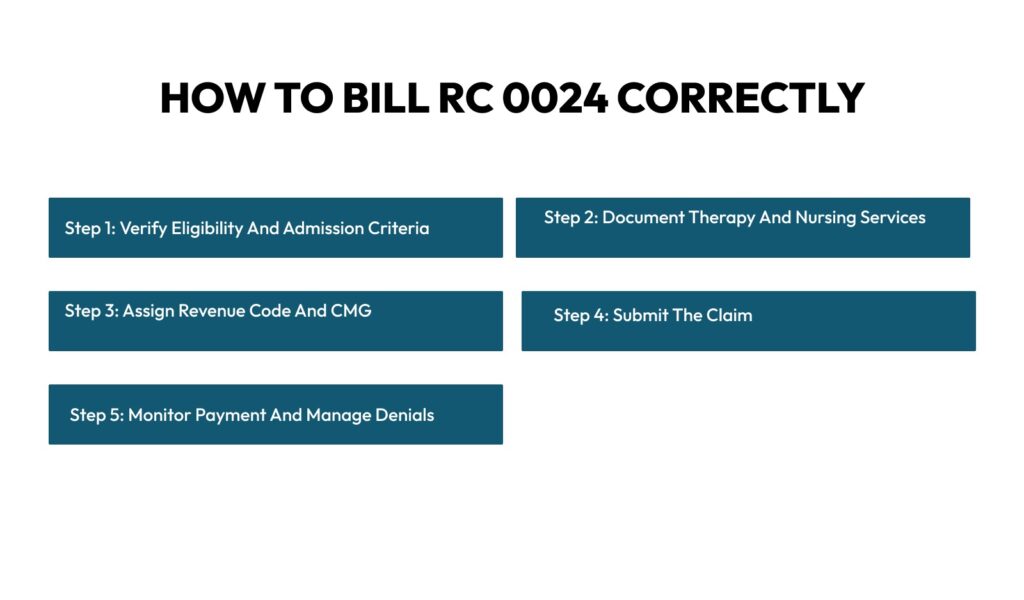
Billing Revenue Code 0024 requires precision at every stage of the revenue cycle management. Since IRF PPS reimbursement is episode-based and driven by patient complexity and therapy intensity, even minor documentation, coding, or submission errors can delay payments or result in denials. Here’s a detailed, step-by-step approach to get it right.
Before submitting a claim, confirm that the patient qualifies for IRF services under Medicare or the payer’s policies. This includes ensuring the patient meets admission criteria, such as:
Verify that the plan of care is signed and physician-certified, and that all pre-authorization or payer requirements are met. Failing to confirm eligibility can result in insurance claim denials or recoupments.
Documentation is the backbone of RC 0024 billing. Because IRF PPS is episode-based, it’s not enough to note visits—you must record therapy intensity, duration, and clinical progress for each day.
Include:
Assigning the correct Revenue Code and Case Mix Group (CMG) is critical because it determines the bundle payment for the episode.
After verifying eligibility, documenting services, and assigning codes, submit the claim:
Submitting the claim is only part of the process. You must track remittance and payment carefully:
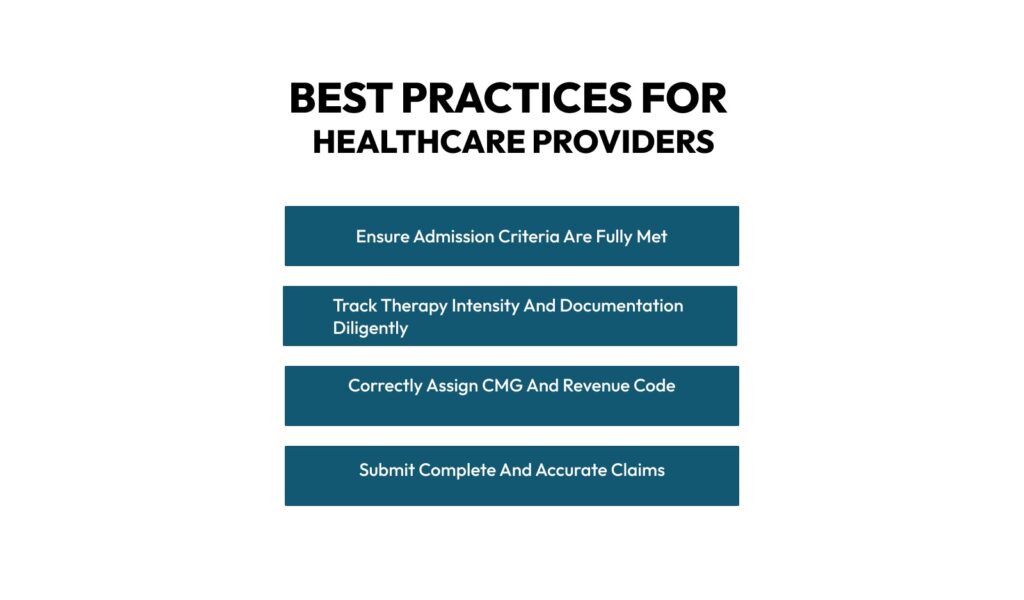
Revenue Code 0024 is the cornerstone for billing inpatient rehabilitation facilities under the IRF Prospective Payment System (IRF PPS). To maximize reimbursement, reduce denials, and streamline your revenue cycle, providers must follow systematic best practices.
Before billing RC 0024, confirm that the patient qualifies for IRF services under Medicare or applicable private payers. Admission criteria often include:
IRF PPS payment is heavily influenced by therapy intensity and patient functional status, so accurate, detailed documentation is critical.
Providers should:
Use EHR systems to track therapy minutes automatically, but always review them manually to ensure accuracy. Include notes on the patient’s response and progression to support complete medical necessity.
CMG assignment is the financial driver of IRF PPS reimbursement. Always ensure:
Best Practice: Cross-check CMG assignments against therapy logs and ICD-10 codes before submitting claims. Consider regular internal audits to ensure consistency and accuracy.
Even with proper documentation and coding, claims can be denied if submitted incorrectly. To ensure compliance:
Best Practice: Conduct a pre-submission scrub using your billing system or clearinghouse to catch missing or mismatched fields. A single missing diagnosis or date can trigger a denial.
Submission isn’t the last step. Providers must actively track remittances and denials:
Best Practice: Maintain a weekly auditing schedule. Quick intervention on denied claims preserves revenue and reduces administrative burden.
Revenue Code 0024 is essential for accurate reimbursement of inpatient rehabilitation episodes. By maintaining thorough documentation, correctly assigning CMG codes, and following meticulous submission processes, IRFs can significantly reduce denials, expedite payments, and ensure the full value of intensive rehab care is recognized. Mastery of RC 0024 allows rehabilitation facilities to focus on delivering high-quality, patient-centered care without the distraction of revenue cycle setbacks.
At Medhasty, we monitor therapy intensity, track documentation in real time, and ensure every RC 0024 claim is compliant, accurate, and fully reimburses you.
Contact us for Inpatient Rehab Billing Solutions.
RC 0024 is used for inpatient rehabilitation facility (IRF) episodes under IRF PPS, which bundles reimbursement based on Case Mix Group (CMG), patient complexity, and therapy intensity. It covers PT, OT, speech therapy, nursing, and room/board charges for the whole episode.
No. RC 0024 is strictly for IRF PPS inpatient episodes. It cannot be used for outpatient therapy, standard hospital admissions, or skilled nursing facility stays. Using it outside of IRF PPS will result in denials.
Documentation should include:
Tip: Therapy logs and progress notes should match the assigned CMG to avoid payment discrepancies.
The CMG is assigned based on:
Many private payers adopt IRF PPS logic, but may include contract-specific adjustments. Always verify payer rules, confirm episode requirements, and submit supporting clinical documentation to avoid underpayment.
Weekly audits are recommended for both RC 0023 and RC 0024 claims. This ensures therapy sessions, nursing notes, and coding align with payer requirements and reduces the risk of denials or delayed payment.