
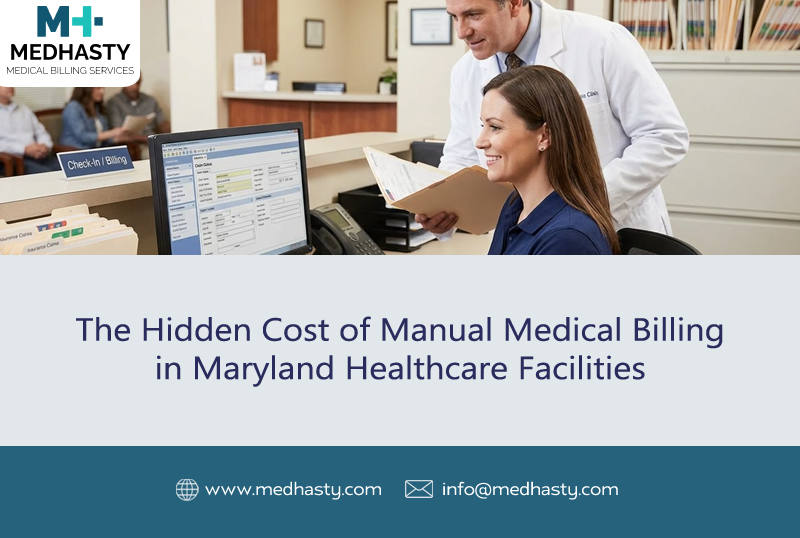
Healthcare providers across Maryland work hard to deliver quality patient care, but many practices still rely on manual medical billing processes that quietly drain time, revenue, and staff productivity. While spreadsheets, paper documentation, and manual claim submission may seem manageable, they often lead to costly errors, delayed reimbursements, and higher administrative expenses.
As healthcare regulations become more complex and insurance requirements continue to evolve, manual billing is becoming an expensive liability rather than a cost-saving solution. This is why many Maryland healthcare facilities are partnering with professional medical billing companies to improve financial performance and reduce operational stress.
Why Manual Medical Billing Is Still Common
Many small and mid-sized healthcare practices continue using manual billing because they:
- Have long-established workflows
- Believe outsourcing is expensive
- Depend on limited administrative staff
- Use outdated billing software
- Lack dedicated revenue cycle specialists
Although these reasons may seem practical, the hidden costs often outweigh any perceived savings.
1. Increased Claim Errors Lead to Revenue Loss
Manual data entry significantly increases the risk of:
- Incorrect patient information
- Coding mistakes
- Missing documentation
- Duplicate claims
- Eligibility verification errors
Even small mistakes can result in claim denials or payment delays. Every denied claim requires additional staff time to investigate, correct, and resubmit.
Professional billing teams use automated verification tools and certified coding expertise to minimize these costly errors.
2. Slower Reimbursements Affect Cash Flow
Manual billing processes usually involve:
- Paper documentation
- Manual insurance verification
- Delayed claim submission
- Slow payment posting
- Lengthy follow-up procedures
The longer claims remain unpaid, the more pressure practices face in covering payroll, equipment costs, and daily operational expenses.
Efficient electronic billing helps practices receive reimbursements much faster.
3. Staff Spend More Time on Administrative Tasks
Medical assistants, front desk staff, and office managers often handle billing alongside their regular responsibilities.
This results in:
- Employee burnout
- Reduced productivity
- Longer patient wait times
- Increased overtime costs
- Less focus on patient care
Instead of supporting patients, staff spend hours correcting claims and communicating with insurance companies.
4. Higher Claim Denial Rates
Insurance companies continually update:
- Billing rules
- Documentation requirements
- Coding guidelines
- Prior authorization policies
Without dedicated billing professionals monitoring these changes, practices experience more:
- Initial denials
- Partial payments
- Claim rejections
- Appeals
Higher denial rates directly reduce practice revenue.
5. Compliance Risks Continue to Grow
Healthcare billing regulations change frequently.
Manual systems make it difficult to keep up with:
- ICD-10 updates
- CPT code revisions
- HIPAA compliance
- Medicare policy changes
- Medicaid billing requirements
Compliance errors may result in audits, financial penalties, or delayed reimbursements.
Professional billing companies stay updated with regulatory changes to reduce compliance risks.
6. Hidden Labor Costs
Many healthcare facilities underestimate the true cost of in-house billing.
Expenses include:
- Staff salaries
- Employee benefits
- Ongoing training
- Billing software
- Hardware upgrades
- Office space
- IT support
These operational costs often exceed the cost of outsourcing billing services.
7. Missed Revenue Opportunities
Manual billing often overlooks legitimate reimbursement opportunities.
Examples include:
- Missed modifiers
- Incorrect procedure coding
- Underbilling
- Unbilled services
- Incomplete documentation
Even minor coding improvements can significantly increase revenue over time.
8. Poor Revenue Cycle Visibility
Manual reporting makes it difficult to monitor important financial metrics such as:
- Days in Accounts Receivable (A/R)
- Collection rates
- Denial trends
- Aging reports
- Payment turnaround times
Without accurate reporting, practice owners struggle to identify revenue leaks.
Modern billing platforms provide real-time dashboards for better financial decision-making.
9. Patient Satisfaction Can Decline
Billing problems affect patients as well.
Manual billing may cause:
- Incorrect invoices
- Delayed statements
- Insurance confusion
- Payment disputes
- Poor communication
A smoother billing experience improves patient trust and overall satisfaction.
10. Difficulty Scaling Practice Growth
As patient volume increases, manual billing quickly becomes inefficient.
Growing healthcare facilities need scalable billing systems that can handle:
- Higher claim volumes
- Multiple providers
- Multiple specialties
- Complex payer requirements
- Electronic reporting
Professional billing services make growth much easier without increasing administrative workload.
Why Maryland Healthcare Facilities Are Outsourcing Medical Billing
Many practices throughout Maryland are outsourcing medical billing because it provides:
- Faster reimbursements
- Lower denial rates
- Improved compliance
- Certified medical coders
- Reduced administrative costs
- Better patient billing experiences
- Scalable revenue cycle management
- Real-time financial reporting
Outsourcing allows physicians and healthcare staff to spend more time focusing on patient care rather than paperwork.
Signs Your Practice Has Outgrown Manual Billing
Your healthcare facility may benefit from outsourced medical billing if you experience:
- Frequent claim denials
- Slow insurance payments
- Increasing accounts receivable
- Staff overwhelmed by billing tasks
- Rising administrative expenses
- Compliance concerns
- Difficulty tracking financial performance
- Declining cash flow
If several of these issues sound familiar, it may be time to modernize your revenue cycle.
How MedHasty Helps Maryland Healthcare Providers
At MedHasty, we help healthcare providers across Maryland streamline their revenue cycle through comprehensive medical billing services.
Our solutions include:
- Medical billing and coding
- Insurance verification
- Claims submission
- Denial management
- Payment posting
- Accounts receivable follow-up
- Revenue cycle management
- HIPAA-compliant billing processes
Our experienced billing specialists work to maximize reimbursements, reduce claim denials, and improve cash flow so your team can focus on delivering exceptional patient care.
Conclusion
Manual medical billing may appear cost-effective, but the hidden expenses associated with claim denials, staff inefficiencies, compliance risks, and delayed reimbursements can significantly impact a healthcare facility’s financial health. As Maryland’s healthcare environment becomes increasingly complex, modern billing solutions are essential for maintaining profitability and operational efficiency.
Partnering with an experienced medical billing company like MedHasty helps healthcare providers reduce administrative burdens, improve revenue cycle performance, and achieve faster, more accurate reimbursements.