

In the rapidly evolving healthcare industry, clean claims have become one of the most critical factors in maintaining financial stability for healthcare providers. As payer requirements become stricter and reimbursement timelines grow more complex, submitting accurate and error-free claims is no longer optional it is essential.
In 2026, healthcare organizations are facing increased pressure to reduce denials, improve cash flow, and maintain compliance with changing regulations. A clean claim ensures providers get reimbursed faster while minimizing administrative burdens and costly rework.
For practices, hospitals, and healthcare organizations looking to optimize their revenue cycle, focusing on clean claims is one of the most effective ways to improve operational efficiency and financial performance.
What Is a Clean Claim?
A clean claim is a medical claim submitted to an insurance payer that is complete, accurate, and free from errors or missing information. These claims can be processed without requiring additional clarification, corrections, or manual intervention.
A clean claim typically includes:
- Accurate patient demographics
- Correct insurance details
- Proper CPT and ICD-10 coding
- Verified eligibility information
- Complete provider information
- Accurate modifiers and documentation
When claims are submitted correctly the first time, providers can significantly reduce payment delays and denials.
Why Clean Claims Are More Important in 2026
1. Rising Claim Denials Across Healthcare
Insurance companies are becoming increasingly strict about claim submissions. Even small mistakes can result in denials, delayed reimbursements, or requests for additional documentation.
In 2026, payer policies continue to evolve rapidly, making it more important than ever for healthcare organizations to implement proactive claims management strategies.
A strong clean claims process helps:
- Reduce denial rates
- Improve first-pass claim acceptance
- Minimize rework for billing teams
- Increase reimbursement speed
Internal Link Opportunity: Link to your Denial Management Services page.
2. Faster Reimbursements Improve Cash Flow
Delayed claims often lead to delayed payments, directly affecting a provider’s cash flow. Healthcare organizations rely on timely reimbursements to manage daily operations, payroll, staffing, and patient care investments.
Submitting clean claims helps practices:
- Shorten accounts receivable (A/R) days
- Improve revenue predictability
- Reduce administrative overhead
- Maintain healthier financial performance
Practices that prioritize clean claims often experience faster payment cycles and stronger overall revenue cycle performance.
Internal Link Opportunity: Link to your Revenue Cycle Management Services page.
The Role of Technology in Clean Claims Management
Modern healthcare billing systems and automation tools are transforming the way claims are processed. In 2026, advanced claims scrubbing tools and AI-driven billing solutions help identify errors before submission.
Technology can help providers:
- Detect coding mistakes
- Verify insurance eligibility in real time
- Identify missing claim information
- Ensure payer-specific compliance
- Reduce manual billing errors
Automated workflows not only improve efficiency but also increase clean claim rates significantly.
Organizations using advanced claims management technology are better positioned to handle increasing payer complexity while improving reimbursement outcomes.Internal Link Opportunity: Link to your Eligibility Verification Services page.
Common Reasons Claims Get Rejected
Many claim denials happen because of preventable issues. Understanding these common errors can help healthcare organizations improve their clean claim rate.
Incorrect Patient Information
Misspelled names, incorrect dates of birth, or outdated insurance details can immediately trigger claim rejections.
Coding Errors
Incorrect CPT, HCPCS, or ICD-10 codes remain one of the leading causes of denials.
Missing Documentation
Incomplete clinical documentation or missing authorization details can delay claim processing.
Eligibility Issues
Failure to verify active coverage before patient visits often results in denied claims.
Duplicate Claims
Submitting duplicate claims can create unnecessary payment delays and payer confusion.
By implementing strong front-end verification and claims review processes, providers can prevent many of these issues before submission.
How Clean Claims Improve Patient Experience
Clean claims do not only benefit providers — they also improve the patient experience.
When claims are processed accurately:
- Patients receive clearer billing statements
- Unexpected billing issues are reduced
- Payment disputes decrease
- Insurance processing becomes smoother
Patients today expect transparency and accuracy in healthcare billing. Efficient claims management helps build trust and improves overall patient satisfaction.
Compliance Challenges in 2026
Healthcare regulations continue to evolve, making compliance a major priority for providers and billing teams.
Submitting inaccurate claims can increase the risk of:
- Compliance violations
- Audit exposure
- Revenue leakage
- Financial penalties
Maintaining clean claims helps healthcare organizations stay aligned with payer requirements and industry regulations while reducing operational risk.
Practices that invest in compliance-focused billing workflows are more likely to achieve long-term financial stability.Internal Link Opportunity: Link to your Medical Billing & Coding Services page.
Best Practices for Improving Clean Claim Rates
Healthcare providers can improve clean claim performance by adopting several proven strategies.
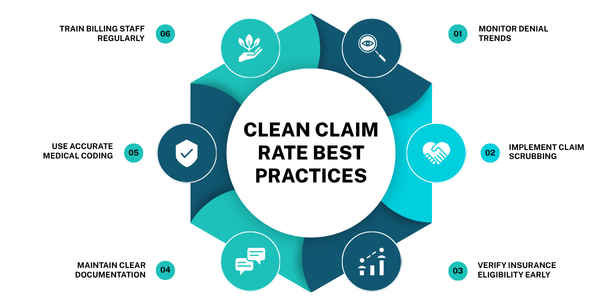
Organizations that consistently monitor and optimize their claims management process can achieve higher first-pass acceptance rates and improved revenue performance.
The Future of Claims Management
As healthcare continues to evolve, claims management will become increasingly data-driven and automated. AI-powered analytics, predictive denial prevention, and real-time eligibility verification are shaping the future of revenue cycle management.
In 2026, providers who prioritize clean claims will gain a competitive advantage by:
- Improving operational efficiency
- Reducing administrative costs
- Accelerating reimbursements
- Enhancing patient satisfaction
- Strengthening financial performance
Clean claims are no longer just a billing goal — they are a critical component of sustainable healthcare operations.
Conclusion
Clean claims matter more than ever in 2026 because they directly impact reimbursement speed, operational efficiency, compliance, and patient satisfaction. As payer requirements become more complex, healthcare organizations must focus on accuracy, automation, and proactive claims management strategies.
By improving clean claim rates, providers can reduce denials, optimize cash flow, and create a more efficient revenue cycle process.
Healthcare organizations that invest in advanced claims management solutions today will be better prepared to succeed in the increasingly competitive healthcare landscape of tomorrow.