
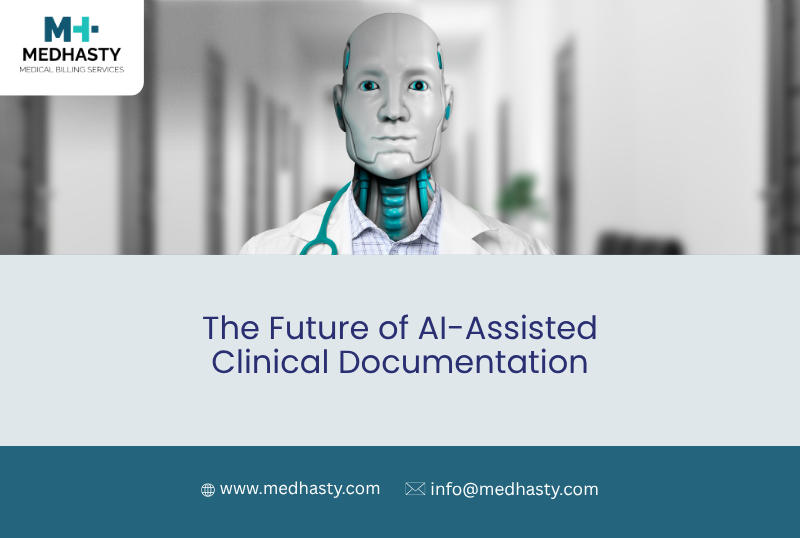
Clinical documentation is one of the most important yet time-consuming responsibilities in healthcare. Accurate documentation supports patient care, facilitates communication among providers, ensures compliance, and drives reimbursement. However, many healthcare professionals spend significant portions of their day completing notes, updating records, and managing administrative tasks instead of focusing on direct patient care.
As healthcare technology continues to evolve, artificial intelligence (AI) is transforming the way clinical documentation is created, managed, and optimized. AI-assisted documentation solutions are helping providers reduce administrative burdens, improve accuracy, and streamline workflows. Looking ahead, these technologies are expected to play an even greater role in shaping the future of healthcare operations.
Why Clinical Documentation Matters
Clinical documentation serves as the foundation of patient care and healthcare revenue cycles. Every diagnosis, treatment plan, procedure, and patient interaction must be accurately recorded to support quality care and proper reimbursement.
Incomplete or inaccurate documentation can lead to:
- Claim denials
- Coding errors
- Compliance risks
- Delayed reimbursements
- Poor care coordination
- Increased audit exposure
Organizations that invest in strong documentation practices often experience better operational performance and improved financial outcomes through services such as Medical Billing and Medical Coding.
What Is AI-Assisted Clinical Documentation?
AI-assisted clinical documentation uses artificial intelligence technologies such as natural language processing (NLP), machine learning, and speech recognition to help providers create accurate clinical records more efficiently.
These systems can:
- Capture physician-patient conversations
- Generate clinical notes automatically
- Suggest documentation improvements
- Identify missing information
- Support coding accuracy
- Improve record completeness
Rather than replacing healthcare professionals, AI serves as a support tool that reduces repetitive administrative tasks and allows providers to spend more time with patients.
The Rise of Ambient Clinical Documentation
One of the most exciting developments in healthcare AI is ambient documentation technology.
Instead of requiring providers to manually enter information during or after patient visits, AI systems can listen to conversations, identify relevant clinical details, and generate draft notes automatically.
This approach offers several benefits:
- Reduced physician burnout
- More patient-focused interactions
- Faster note completion
- Improved documentation consistency
- Increased productivity
As AI technology becomes more sophisticated, ambient documentation is expected to become a standard component of many healthcare practices.
Improved Coding Accuracy Through AI
Clinical documentation and medical coding are closely connected. Incomplete documentation often results in coding errors that affect reimbursement and compliance.
Future AI systems will be increasingly capable of:
- Identifying missing documentation elements
- Suggesting appropriate diagnosis codes
- Highlighting coding inconsistencies
- Supporting risk-adjusted documentation
- Improving claim accuracy
When combined with professional Denial Management processes, AI-assisted documentation can help healthcare organizations reduce costly claim denials and improve reimbursement outcomes.
Enhanced Revenue Cycle Performance
AI-assisted documentation is expected to significantly strengthen healthcare revenue cycle management.
More accurate clinical records lead to:
- Cleaner claims
- Faster claim submission
- Fewer payer rejections
- Reduced documentation-related denials
- Improved reimbursement accuracy
Organizations that integrate documentation improvements with services such as AR Follow-Up and Analytics & Reporting can gain greater visibility into financial performance while optimizing revenue collection.
Better Support for Value-Based Care
The healthcare industry continues to shift toward value-based care models that reward quality outcomes rather than service volume.
These models require detailed documentation to demonstrate:
- Patient outcomes
- Quality measures
- Risk factors
- Care coordination activities
- Preventive care efforts
AI-assisted systems can help providers capture this information more consistently, ensuring organizations meet reporting requirements while supporting quality improvement initiatives.
Integration With Electronic Health Records
Future AI documentation tools will become increasingly integrated with electronic health record systems and other healthcare technologies.
This integration may allow AI to:
- Prepopulate patient information
- Retrieve historical records
- Suggest treatment documentation
- Flag documentation gaps
- Improve workflow automation
By reducing manual data entry, healthcare organizations can improve efficiency while maintaining comprehensive patient records.
Supporting Telehealth and Remote Care
The growth of virtual care has created new documentation challenges for providers.
AI-assisted documentation can streamline workflows for virtual visits by automatically capturing key details and generating structured clinical notes.
Organizations utilizing services such as Remote Patient Monitoring and telehealth programs can benefit from AI-driven documentation tools that improve efficiency while maintaining documentation quality across digital care environments.
Challenges That Must Be Addressed
Despite its potential, AI-assisted documentation is not without challenges.
Healthcare organizations must carefully address:
- Data privacy concerns
- HIPAA compliance requirements
- Documentation accuracy
- Provider oversight
- System integration complexities
- Bias in AI algorithms
Human review will remain essential to ensure documentation accuracy and clinical appropriateness. AI should be viewed as a tool that enhances provider capabilities rather than replacing clinical judgment.
The Role of Healthcare Staff in an AI-Driven Future
Even as AI becomes more advanced, healthcare professionals will remain central to the documentation process.
Providers will continue to:
- Validate clinical information
- Make treatment decisions
- Ensure documentation accuracy
- Maintain patient relationships
- Exercise professional judgment
AI will help reduce administrative burdens, but human expertise will remain critical for delivering safe, effective, and compassionate care.
Looking Ahead
The future of AI-assisted clinical documentation is promising. As technologies continue to evolve, healthcare organizations can expect improved efficiency, greater documentation accuracy, enhanced coding support, and stronger revenue cycle performance.
Practices that embrace these innovations while maintaining strong compliance and quality standards will be well-positioned for long-term success. Combined with expert solutions such as Insurance Verification, Provider Credentialing, and comprehensive healthcare revenue cycle support, AI-assisted documentation can become a powerful driver of both clinical and financial excellence.
Healthcare providers interested in optimizing operational performance can explore the full range of solutions available through the Medhasty Services page or learn more about the company on the About Us page.