

Medicare continues to be one of the largest healthcare payers in the United States, making Medicare billing accuracy a critical component of revenue cycle management. As regulations evolve and reimbursement models become increasingly complex, healthcare providers must stay informed about Medicare billing changes to avoid claim denials, compliance issues, and revenue disruptions.
In 2026, Medicare updates are affecting reimbursement methodologies, documentation requirements, telehealth services, value-based care initiatives, and compliance standards. Providers who proactively adapt to these changes can improve billing accuracy, accelerate reimbursements, and strengthen their overall financial performance.
For healthcare organizations looking to optimize their revenue cycle, understanding Medicare billing updates is essential for maintaining compliance and maximizing reimbursement opportunities.
Why Medicare Billing Updates Matter
Medicare regulations are updated regularly to address changing healthcare needs, improve patient outcomes, and control healthcare spending.
Failure to stay current with billing changes can result in:
- Increased claim denials
- Delayed reimbursements
- Compliance violations
- Audit exposure
- Revenue loss
Healthcare providers that monitor Medicare updates closely can reduce administrative challenges while ensuring claims are submitted accurately and efficiently.
Key Medicare Billing Changes in 2026
Several Medicare billing updates are expected to impact healthcare providers across multiple specialties and care settings.
Understanding these changes allows organizations to prepare billing teams, update workflows, and minimize reimbursement disruptions.
1. Continued Expansion of Value-Based Care Models
Medicare continues shifting from traditional fee-for-service reimbursement toward value-based care programs that focus on quality outcomes and cost efficiency.
Providers participating in these programs may experience:
- Performance-based reimbursement adjustments
- Increased reporting requirements
- Quality measurement tracking
- Enhanced care coordination expectations
Organizations that effectively align billing and clinical documentation with value-based care initiatives can improve reimbursement opportunities while enhancing patient outcomes.
Internal Link Opportunity: Link to your Revenue Cycle Management Services page.
2. Increased Documentation Requirements
Accurate documentation remains one of the most important factors in Medicare billing compliance.
In 2026, providers are expected to maintain detailed documentation supporting:
- Medical necessity
- Treatment plans
- Diagnosis accuracy
- Procedure justification
- Care coordination activities
Incomplete documentation can result in denied claims, payment recoupments, and audit findings.
Healthcare organizations should continue strengthening clinical documentation improvement (CDI) programs to support compliant billing practices.
3. Telehealth Billing Updates
Telehealth services have become a permanent component of healthcare delivery, and Medicare continues refining billing requirements for virtual care.
Providers should closely monitor updates related to:
- Eligible telehealth services
- Approved provider types
- Documentation standards
- Place of service requirements
- Reimbursement policies
Accurate telehealth billing is essential for ensuring claims are processed correctly and reimbursed appropriately.
Healthcare organizations should regularly review Medicare guidance to remain compliant with evolving telehealth regulations.
4. Enhanced Audit and Compliance Oversight
Medicare contractors continue expanding audit activities to identify billing errors, improper payments, and compliance concerns.
Areas receiving increased scrutiny often include:
- Evaluation and Management (E/M) services
- Medical necessity documentation
- High-cost procedures
- Modifier usage
- Risk-adjusted coding
Healthcare providers must maintain robust compliance programs to reduce audit risks and ensure billing accuracy.
Regular internal audits can help identify issues before they become larger compliance concerns.
5. Changes to Reimbursement Methodologies
Medicare reimbursement methodologies continue evolving as healthcare transitions toward outcome-focused payment models.
Providers may experience changes related to:
- Physician fee schedules
- Ambulatory care reimbursement
- Chronic care management services
- Preventive care incentives
- Alternative payment models
Monitoring reimbursement updates allows healthcare organizations to adjust financial planning and revenue cycle strategies accordingly.
Understanding how reimbursement changes affect specific specialties is critical for long-term financial stability.
The Impact of Medicare Changes on Revenue Cycle Management
Medicare billing updates affect multiple aspects of the revenue cycle.
Healthcare organizations that fail to adapt may experience operational challenges and financial losses.
Increased Claim Denials
Outdated billing processes can result in denied or rejected Medicare claims.
Delayed Reimbursements
Incorrect coding or documentation often leads to payment delays and additional administrative work.
Higher Administrative Costs
Billing teams may spend more time correcting preventable errors when Medicare changes are not implemented effectively.
Compliance Risks
Failure to follow Medicare requirements can increase exposure to audits, penalties, and repayment demands.
By proactively managing Medicare updates, providers can strengthen financial performance and operational efficiency.
How Technology Helps Manage Medicare Billing Changes
Modern revenue cycle technology is helping healthcare organizations navigate increasingly complex Medicare requirements.
Advanced billing solutions can:
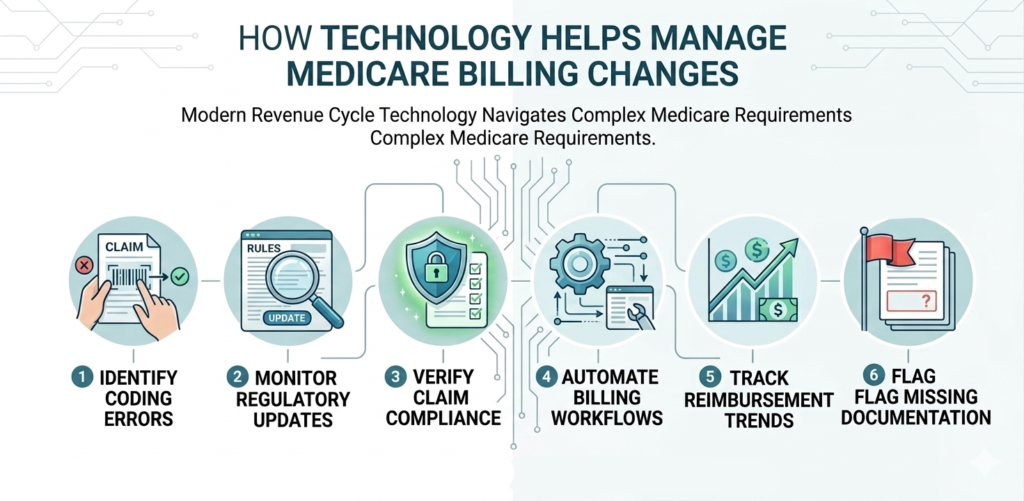
Automation helps providers adapt more quickly to Medicare changes while reducing administrative burdens.
Organizations leveraging technology often achieve higher claim acceptance rates and improved reimbursement outcomes.
Internal Link Opportunity: Link to your Claims Management Services page.
Best Practices for Adapting to Medicare Billing Changes
Healthcare providers can reduce disruption and improve compliance by adopting several best practices.
These include:
- Monitoring Medicare policy updates regularly
- Providing ongoing staff education and training
- Conducting routine coding audits
- Strengthening clinical documentation practices
- Utilizing billing automation tools
- Reviewing payer-specific requirements
- Tracking key revenue cycle performance metrics
Organizations that invest in continuous improvement are better positioned to navigate regulatory changes successfully.
The Future of Medicare Billing
As healthcare continues evolving, Medicare billing will become increasingly data-driven, technology-enabled, and outcome-focused.
Future trends may include:
- Expanded value-based reimbursement models
- Greater use of artificial intelligence in billing workflows
- Enhanced compliance monitoring
- Increased interoperability requirements
- More sophisticated audit programs
- Real-time claims processing capabilities
Healthcare providers that embrace innovation and maintain compliance-focused billing strategies will be better equipped to succeed in a changing reimbursement environment.
Why Proactive Preparation Matters
Waiting until Medicare changes take effect can create unnecessary operational challenges and revenue disruptions.
Proactive preparation allows providers to:
- Update billing workflows in advance
- Train staff effectively
- Reduce claim errors
- Improve reimbursement accuracy
- Strengthen compliance efforts
Organizations that stay ahead of Medicare updates often experience smoother transitions and stronger financial outcomes.
Internal Link Opportunity: Link to your Eligibility Verification Services page.
Conclusion
Medicare billing changes continue to shape the healthcare reimbursement landscape in 2026. From evolving documentation requirements and telehealth policies to value-based care initiatives and reimbursement updates, providers must remain informed to maintain billing accuracy and compliance.
Healthcare organizations that proactively adapt to Medicare changes can reduce denials, improve reimbursement speed, strengthen compliance, and enhance overall revenue cycle performance.
By investing in education, technology, and effective billing processes, providers can successfully navigate Medicare’s evolving requirements while positioning themselves for long-term financial success.